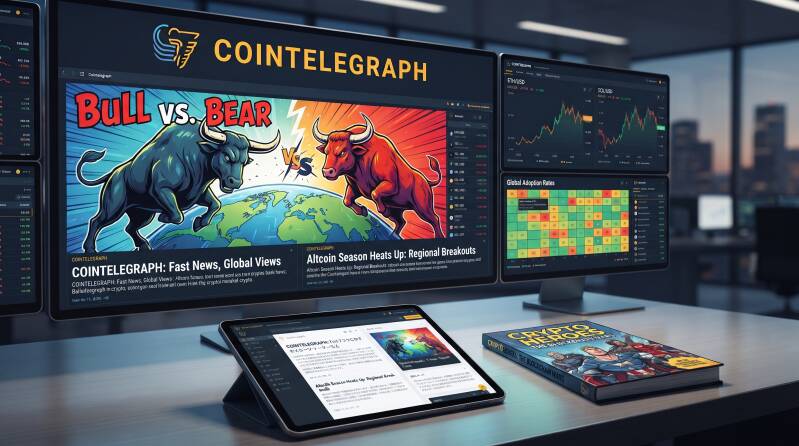
When you think of the visual identity of cryptocurrency media, one distinct style instantly comes to mind: bold, satirical, comic-book-inspired artwork accompanying breaking market updates. For over a decade, Cointelegraph has carved out a unique space as one of the most recognizable and widely read digital native crypto outlets in the world.
Unlike traditional financial terminals that lean into dry corporate prose, Cointelegraph blends rapid-fire news cycles with vibrant illustration, making the chaotic world of blockchain technology accessible to millions of readers globally.
Let’s take a close look at Cointelegraph’s core strengths, its global footprint, and whether it deserves a spot in your daily reading stack.
1. Visual Storytelling: Comic-Style Art and Digestible Summaries
One of Cointelegraph’s standout defining features is its commitment to visual journalism. In a sector bogged down by dense whitepapers, technical jargon, and endless market charts, Cointelegraph utilizes custom-illustrated graphics, infographics, and satirical cartoons for its top stories.
This creative approach does more than just look good on a social media timeline. It helps break down complex protocol updates, macroeconomic shifts, and regulatory rulings into highly digestible, visual summaries. For Web3 beginners and retail investors who might find raw data intimidating, these artistic interpretations bridge the gap between heavy technical concepts and everyday understanding.
2. Global Footprint: Multi-Language Feeds and Regional Adoption
Cryptocurrency is a borderless technology, yet much of Western crypto media focuses heavily on North American regulations and English-speaking markets. Cointelegraph addresses this gap through an extensive network of regional hubs and multi-language translation feeds.
By publishing content across diverse language editions—including Spanish, Japanese, German, Portuguese, and Arabic—Cointelegraph captures localized adoption stories, regional regulatory debates, and grassroots community movements that mainstream US-centric outlets frequently overlook. This international architecture makes it a powerful barometer for tracking how blockchain technology is adopted globally, from Latin America to Southeast Asia.
3. Who Is Cointelegraph For?
Cointelegraph is tailored specifically for a dynamic, fast-moving audience. Its coverage style caters directly to:
-
Retail Investors & Altcoin Traders: Individuals looking for rapid breaking news updates, price movements, sentiment checks, and ecosystem shifts across hundreds of alternative tokens.
-
Web3 Beginners: Readers searching for clear explanations, introductory guides, and well-illustrated overviews of emerging technologies like decentralized finance (DeFi) and NFTs.
-
Global Crypto Enthusiasts: Users who want multi-perspective regional coverage rather than a purely Western-centric view of the market.
Pros & Cons
Pros Cons Engaging Visual Style: Unique comic-book artwork and infographics make articles easy to digest. High Noise-to-Signal Ratio: Fast publishing schedules can sometimes prioritize speed and trend-chasing over deep, rigorous analysis. True Global Coverage: Multi-language regional editions track international adoption effectively. Retail Focus: Less suited for institutional macro traders looking for deep, raw on-chain data terminals. Rapid Breaking News: Exceptionally fast turnaround on daily market events and altcoin developments.
Add comment
Comments